How Arsenic in your Food and in the Environment Affects Health — And How to Reduce Your Exposure
Arsenic is a naturally occurring element found in soil, water, and air, but modern industrial practices have increased levels far beyond what the human body was designed to handle. Long-term exposure, even at low levels, can quietly disrupt multiple systems in the body, making arsenic one of the most concerning environmental toxins today.
How Arsenic Affects Human Health
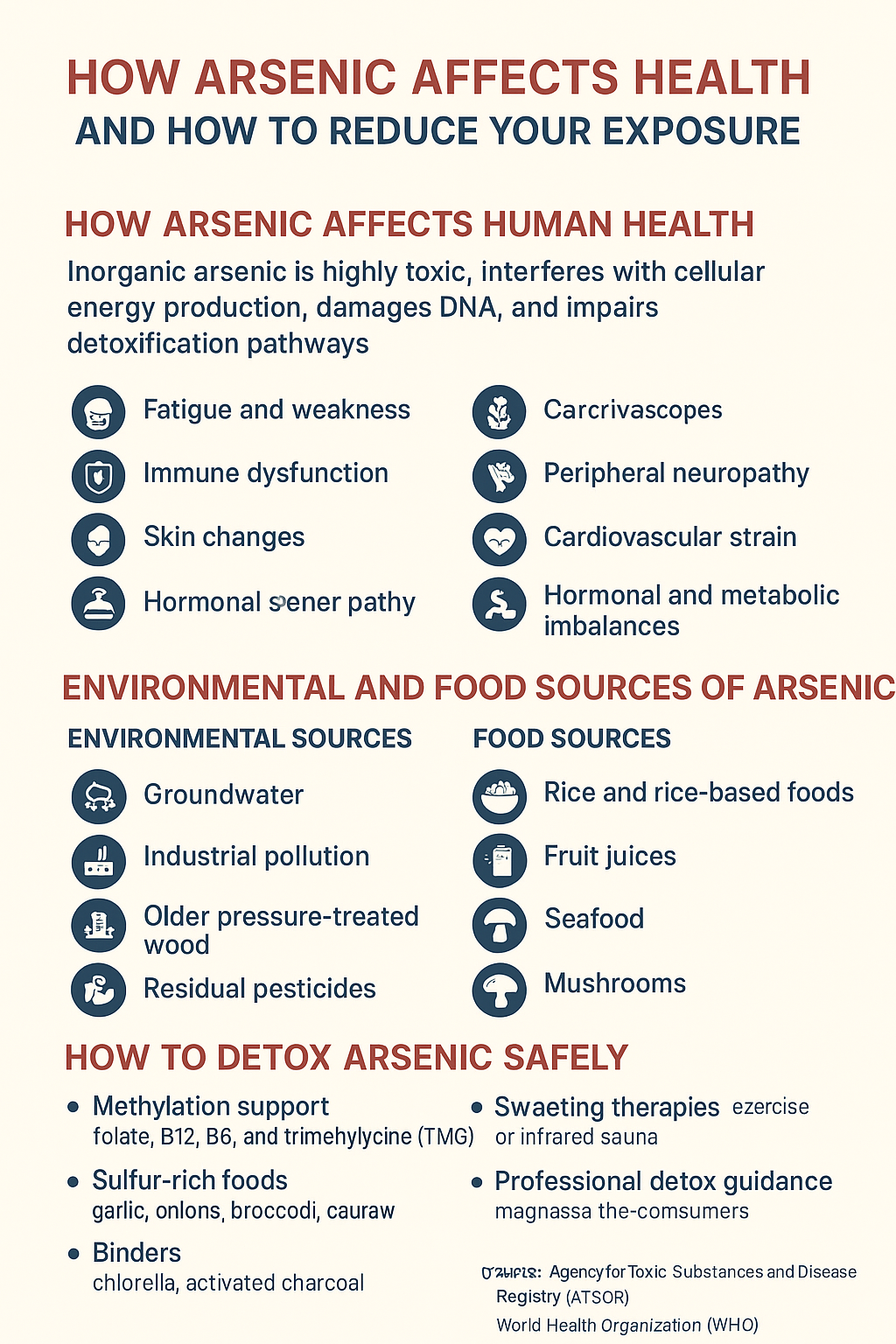
Arsenic exists in two primary forms: organic (less toxic) and inorganic (highly toxic). Inorganic arsenic—commonly found in groundwater, contaminated soil, and certain foods—can interfere with cellular energy production, damage DNA, and impair detoxification pathways.
Chronic exposure has been associated with:
Fatigue and weakness from mitochondrial disruption
Immune dysfunction and increased infection susceptibility
Skin changes such as hyperpigmentation and keratosis
Peripheral neuropathy (tingling, numbness, or burning sensations)
Cardiovascular strain and higher blood pressure
Increased cancer risk, especially skin, lung, and bladder cancers
Hormonal and metabolic imbalances, including glucose regulation problems
Because symptoms can be vague, many people live with arsenic toxicity unknowingly.
Environmental and Food Sources of Arsenic
Arsenic exposure occurs from multiple, everyday sources—often without obvious warning signs.
Environmental Sources
Groundwater, especially in private wells
Industrial pollution, including mining, metal smelting, and coal combustion
Older pressure-treated wood (manufactured before 2003)
Residual pesticides still present in soil
Food Sources
Rice and rice-based foods, which absorb arsenic readily
Fruit juices, particularly apple and grape
Seafood, especially seaweed and shellfish (mostly organic arsenic)
Mushrooms grown in contaminated soil
Certain poultry products, particularly imported, where arsenic-based feed additives may still be used
How to Detox Arsenic Safely
You can support the body’s natural elimination pathways with:
Methylation support: folate, B12, B6, and trimethylglycine (TMG)
Sulfur-rich foods: garlic, onions, broccoli, cauliflower, cabbage
Binders: chlorella, activated charcoal, or modified citrus pectin
Sweating therapies: exercise or infrared sauna
Mineral support: selenium, magnesium, and zinc
Professional detox guidance: functional medicine practitioners can test for arsenic and administer chelation if appropriate
Sources
Agency for Toxic Substances and Disease Registry (ATSDR). Toxicological Profile for Arsenic.
World Health Organization (WHO). Arsenic Fact Sheet.
National Institute of Environmental Health Sciences (NIEHS). Arsenic and Human Health.
U.S. Environmental Protection Agency (EPA). Arsenic in Drinking Water.
International Agency for Research on Cancer (IARC). Arsenic and Arsenic Compounds Monograph.
FDA. Arsenic in Rice and Rice Products.
