Mercury Toxicity and Detoxification: A Holistic Approach to Reducing Toxic Burden
Mercury is a naturally occurring element, but human activity has increased opportunities for exposure through food, industry, pollution, and certain occupational environments. From a holistic healthcare perspective, mercury exposure is one factor that may contribute to an individual's overall toxic burden. A comprehensive approach should focus first on identifying meaningful sources of exposure, using appropriate laboratory testing, and supporting the body's normal detoxification and elimination processes.
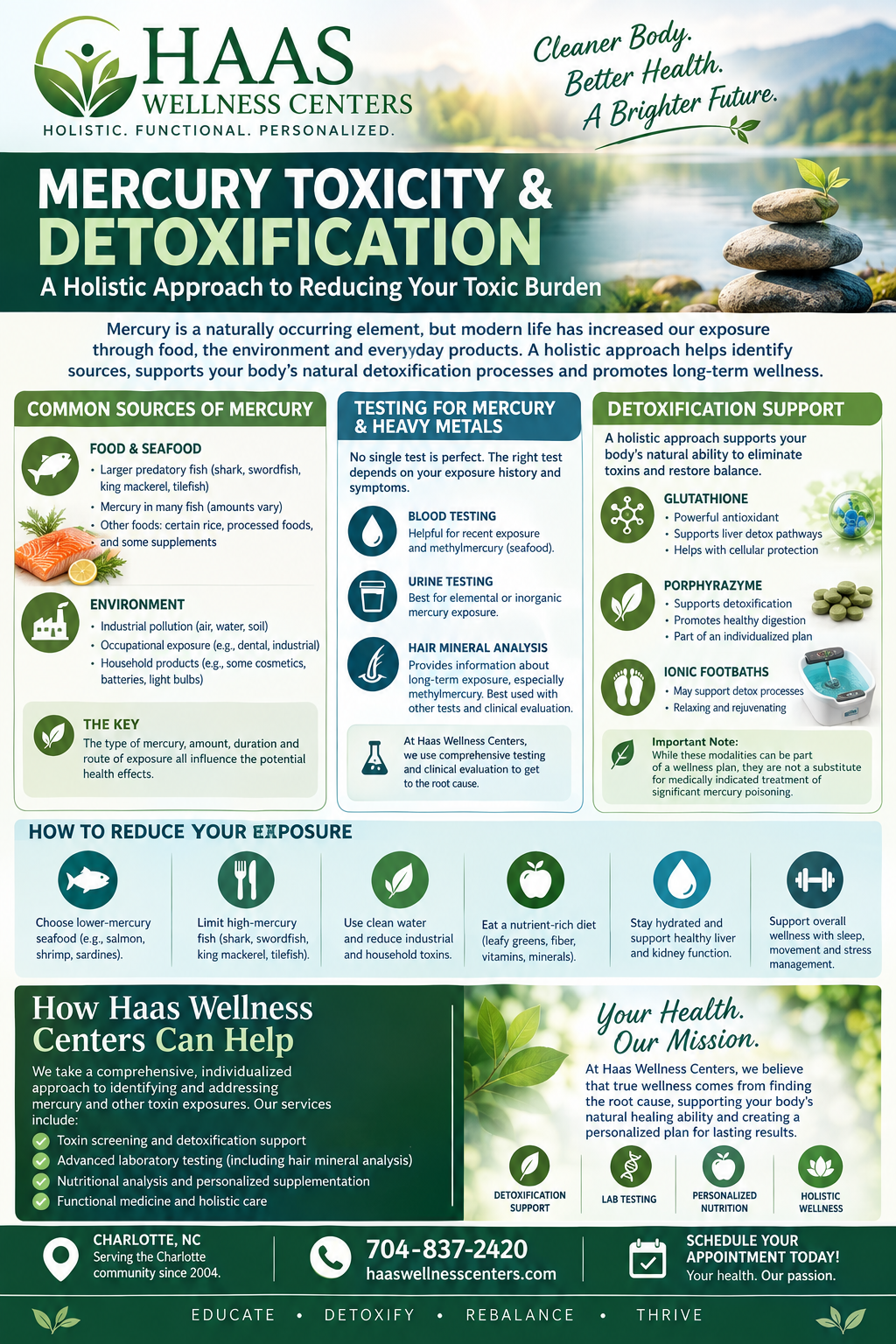
Common Sources of Mercury
One of the most important dietary sources of mercury is fish and seafood. Nearly all fish contain some mercury, but concentrations vary considerably by species. Larger, long-lived predatory fish tend to accumulate more mercury. Shark, swordfish, king mackerel, and certain types of tilefish are among the species traditionally identified as higher in mercury. Lower-mercury seafood options can still provide valuable protein and omega-3 fatty acids.
Environmental exposure can also occur through mercury released into air, water, and soil from industrial processes. Certain occupations and activities may increase exposure to elemental mercury vapor. Exposure history is therefore an important part of any evaluation.
The potential effects of mercury depend heavily on its chemical form, amount, duration, and route of exposure. Significant exposure can affect the nervous system and other organs, which is why persistent or suspected high-level exposure should be evaluated by an appropriately qualified medical professional.
Testing for Mercury and Heavy Metals
There is no single laboratory test that is ideal for every form of mercury exposure. The most appropriate test depends on the suspected source and type of mercury.
Urine testing is particularly useful when elemental or inorganic mercury exposure is suspected because mercury from these forms is primarily eliminated through the urine. Blood testing can be useful for evaluating more recent exposure and is also commonly considered when methylmercury exposure from seafood is suspected.
Hair mineral analysis is another assessment sometimes incorporated into a broader holistic evaluation. Hair can provide information about longer-term exposure patterns, particularly for methylmercury. However, hair testing has important limitations: external contamination, hair treatments, and laboratory methodology can affect results. For this reason, hair mineral analysis should not be interpreted in isolation and is best considered alongside exposure history and clinically appropriate blood or urine testing.
At Haas Wellness Centers, laboratory testing can be incorporated into an individualized assessment to help identify potential toxin exposures and other factors that may influence a patient's health.
A Holistic Approach to Detoxification
The first principle of mercury detoxification is to reduce or eliminate the source of ongoing exposure whenever possible. This may involve making informed seafood choices, addressing occupational or environmental exposures, and reviewing other potential sources.
The body has its own sophisticated systems for processing and eliminating many compounds. Adequate nutrition, hydration, healthy bowel function, physical activity, and overall liver and kidney health are fundamental components of supporting these normal processes.
Glutathione Support
Glutathione is an important antioxidant involved in cellular protection and biochemical pathways associated with detoxification. It participates in reactions that help the body process and eliminate certain toxic compounds. Nutritional strategies designed to support glutathione production may therefore be considered as part of a comprehensive wellness plan.
However, glutathione supplementation should not be represented as a substitute for medically indicated treatment of confirmed mercury poisoning. Individuals with significant exposure require appropriate medical evaluation and monitoring.
Porphyrazyme
Porphyrazyme is a supplement used in some holistic detoxification programs. At Haas Wellness Centers, it may be considered as part of an individualized nutritional strategy intended to support the body's normal detoxification processes. Because supplement effects can vary between individuals, recommendations should be based on a person's history, symptoms, medications, nutritional status, and laboratory findings.
Ionic Footbaths
Ionic footbaths are another modality offered in some holistic detoxification programs. At Haas Wellness Centers, detox footbath therapy is used as part of a broader wellness approach.
How Haas Wellness Centers Can Help
A holistic evaluation should look beyond a single symptom or laboratory result. At Haas Wellness Centers, the approach may include a detailed health and exposure history, laboratory testing when appropriate, nutritional evaluation, and individualized recommendations designed to support overall health and the body's normal detoxification systems. Services listed by the practice include toxin screening and detoxification support, nutritional analysis, laboratory testing, and other complementary approaches.
The Bottom Line
Mercury exposure is a legitimate environmental health concern, but effective care begins with accurate identification of the source and appropriate testing. A holistic strategy can support overall resilience through nutrition and lifestyle while working to reduce unnecessary exposures. For confirmed or significant mercury poisoning, medically supervised treatment is essential; prescription chelation agents have potential risks and should not be used casually as over-the-counter “detox” products.
The most effective approach is individualized: identify the exposure, choose the appropriate testing method, reduce the source, and develop a safe, evidence-informed plan to support long-term health.
References
U.S. Food and Drug Administration. Mercury in Food and Dietary Supplements and FDA/EPA fish-consumption guidance.
Agency for Toxic Substances and Disease Registry. Metallic Mercury: ToxFAQs™.
U.S. EPA/ATSDR. Evaluating Mercury Exposure: Information for Health Care Providers.
ATSDR. Hair Analysis Panel Discussion.
Kennedy DA, et al. Objective Assessment of an Ionic Footbath (IonCleanse): Testing Its Ability to Remove Potentially Toxic Elements from the Body. Journal of Environmental and Public Health. 2012.
U.S. Food and Drug Administration. Questions and Answers on Unapproved Chelation Products.
Haas Wellness Centers — Toxin Screening & Detoxification and Laboratory Testing Services.
