Vitamin D: A Foundational Nutrient for Whole-Body Wellness
Vitamin D is one of the most important—and most commonly deficient—nutrients in modern healthcare. Often referred to as a vitamin, it functions more like a hormone, influencing the activity of thousands of genes and playing a critical role in nearly every system of the body. From a holistic healthcare perspective, optimal vitamin D levels are foundational to long-term health, resilience, and disease prevention.
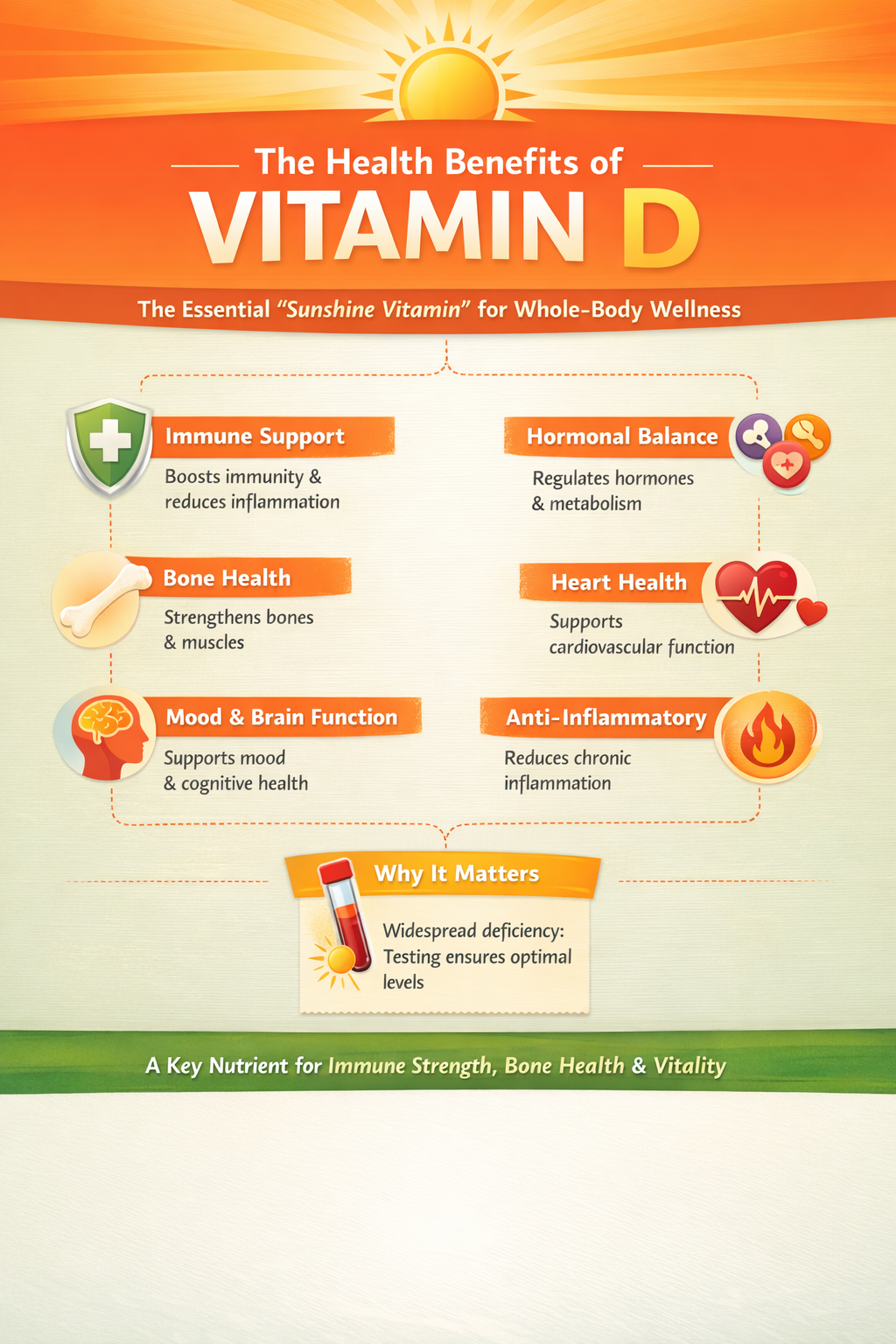
Immune System Support
One of vitamin D’s most well-established roles is immune regulation. It enhances innate immunity while helping balance the adaptive immune response, reducing excessive inflammation. Adequate vitamin D levels are associated with lower rates of respiratory infections, improved immune resilience, and a reduced risk of autoimmune conditions. In clinical practice, low vitamin D is frequently observed in patients with chronic infections, allergies, and autoimmune disorders.
Bone and Musculoskeletal Health
Vitamin D is essential for calcium absorption and proper bone mineralization. Without sufficient vitamin D, calcium cannot be effectively utilized, increasing the risk of osteopenia, osteoporosis, and fractures. Vitamin D also supports muscle strength and coordination, helping reduce falls and musculoskeletal pain, particularly in older adults.
Hormonal and Metabolic Balance
Vitamin D plays a significant role in endocrine health. It supports insulin sensitivity, healthy blood sugar regulation, and proper thyroid and adrenal function. Low vitamin D levels have been linked to metabolic syndrome, weight gain, and fatigue. From a holistic standpoint, optimizing vitamin D is a key step in restoring metabolic balance and energy.
Mood, Brain, and Nervous System Health
Vitamin D receptors are widely distributed throughout the brain. Adequate levels are associated with improved mood, cognitive function, and nervous system regulation. Deficiency has been linked to depression, seasonal affective disorder, brain fog, and increased risk of neurodegenerative conditions. Supporting vitamin D levels is a simple but powerful strategy for mental and emotional well-being.
Cardiovascular and Inflammatory Health
Vitamin D helps regulate blood pressure, supports healthy endothelial function, and reduces chronic inflammation. Low levels are associated with increased cardiovascular risk, including hypertension and arterial stiffness. By modulating inflammatory pathways, vitamin D contributes to heart health and overall systemic balance.
Why Testing Matters
Despite its importance, vitamin D deficiency is widespread due to limited sun exposure, sunscreen use, aging, and impaired absorption. Holistic healthcare emphasizes laboratory testing to determine optimal—not just “normal”—levels and guide individualized supplementation.
Conclusion
Vitamin D is a cornerstone nutrient for immune strength, bone integrity, hormonal balance, brain health, and cardiovascular function. Optimizing vitamin D levels is one of the most effective, evidence-based steps you can take to support whole-body health and long-term vitality.
