A Holistic Approach to Eczema
From a holistic healthcare perspective, eczema is often viewed as more than just a skin condition. Rather than being solely a problem of the skin, eczema may be a manifestation of underlying imbalances involving the immune system, digestive system, environmental exposures, and lifestyle factors. While conventional medicine often focuses on managing symptoms, holistic practitioners seek to identify and address potential root causes.
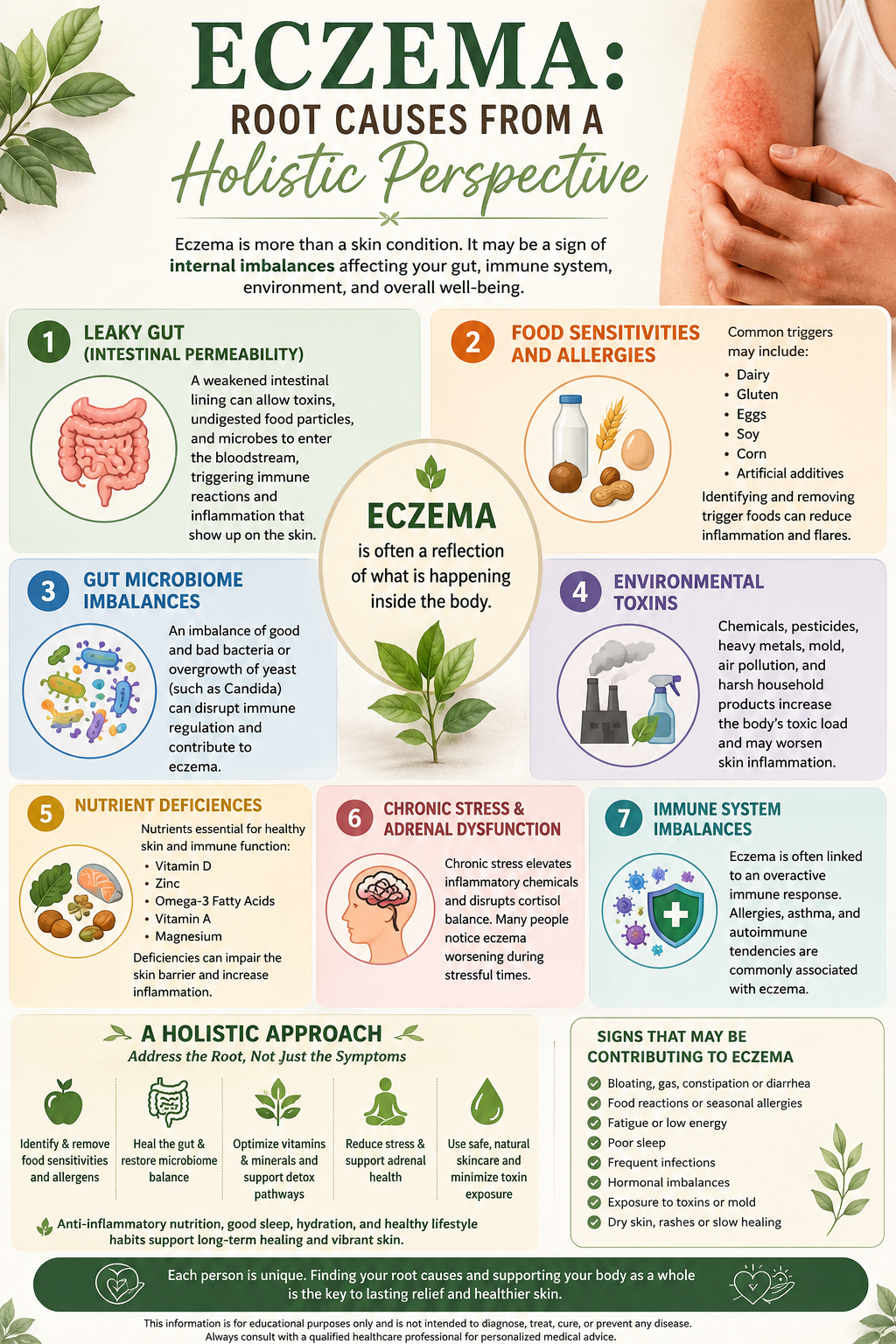
1. Leaky Gut (Intestinal Permeability)
Many holistic practitioners believe that eczema is strongly associated with increased intestinal permeability, commonly known as "leaky gut." When the intestinal lining becomes compromised, partially digested food particles, toxins, and microbes may enter the bloodstream, triggering immune reactions and systemic inflammation that can appear on the skin.
2. Food Sensitivities and Allergies
Certain foods may contribute to eczema flare-ups in susceptible individuals. Common triggers include:
Dairy products
Gluten-containing grains
Eggs
Soy
Corn
Artificial food additives
Identifying food sensitivities through elimination diets or testing may help reduce inflammation and skin symptoms.
3. Gut Microbiome Imbalances
The health of the gut microbiome plays a major role in immune regulation. An overgrowth of yeast such as Candida, harmful bacteria, or insufficient beneficial bacteria may contribute to chronic inflammation and eczema.
4. Environmental Toxins
Exposure to chemicals, pesticides, heavy metals, mold, air pollution, and household cleaning products may increase the body's toxic burden. Some holistic practitioners find that reducing toxin exposure and supporting detoxification pathways can improve skin health.
5. Nutrient Deficiencies
Several nutrients are important for healthy skin and immune function:
Vitamin D
Zinc
Omega-3 fatty acids
Vitamin A
Magnesium
Deficiencies may impair skin barrier function and increase inflammation.
6. Chronic Stress and Adrenal Dysfunction
Stress can significantly influence eczema. Chronic stress elevates inflammatory chemicals and may disrupt cortisol balance. Many patients notice eczema worsening during emotionally stressful periods.
7. Immune System Imbalances
Eczema is often associated with an overactive immune response. Allergies, asthma, and autoimmune tendencies frequently occur alongside eczema, suggesting underlying immune dysregulation.
A Holistic Approach
A comprehensive holistic approach may include:
Identifying food sensitivities
Healing leaky gut
Restoring microbiome balance
Optimizing vitamin D and nutrient levels
Reducing toxic exposures
Supporting adrenal health and stress management
Using anti-inflammatory nutrition
By addressing these underlying factors, many individuals experience not only improvement in their eczema but also better overall health and vitality. While each person's triggers are unique, looking beyond the skin often provides the greatest opportunity for long-term improvement.
References
National Eczema Association. Eczema causes and triggers. Available at: National Eczema Association
National Institutes of Health. Gut microbiome and immune system interactions. Available at: National Institutes of Health
World Health Organization. Environmental exposures and health effects. Available at: World Health Organization
Bowe WP, Logan AC. Clinical implications of the gut-brain-skin axis. Gut Pathogens. 2011;3(1):1.
Salem I, Ramser A, Isham N, Ghannoum MA. The gut microbiome as a major regulator of the gut-skin axis. Frontiers in Microbiology. 2018;9:1459.
Kim J, Kim BE, Leung DYM. Pathophysiology of atopic dermatitis: Clinical implications. Allergy and Asthma Proceedings. 2019;40(2):84-92.
American Academy of Dermatology. Atopic dermatitis and eczema resources. Available at: American Academy of Dermatology
