Microplastics and Your Health: A Holistic Perspective on Exposure, Prevention, and Detoxification
Microplastics—tiny plastic particles less than 5 millimeters in size—have quietly become a pervasive part of modern life. They are now found in water, food, air, and even human tissues. Scientific literature confirms that microplastics are ubiquitous in the environment and can enter the human body through ingestion, inhalation, and the food chain. () From a holistic perspective, this represents a growing toxic burden that challenges the body’s natural ability to maintain balance and resilience.
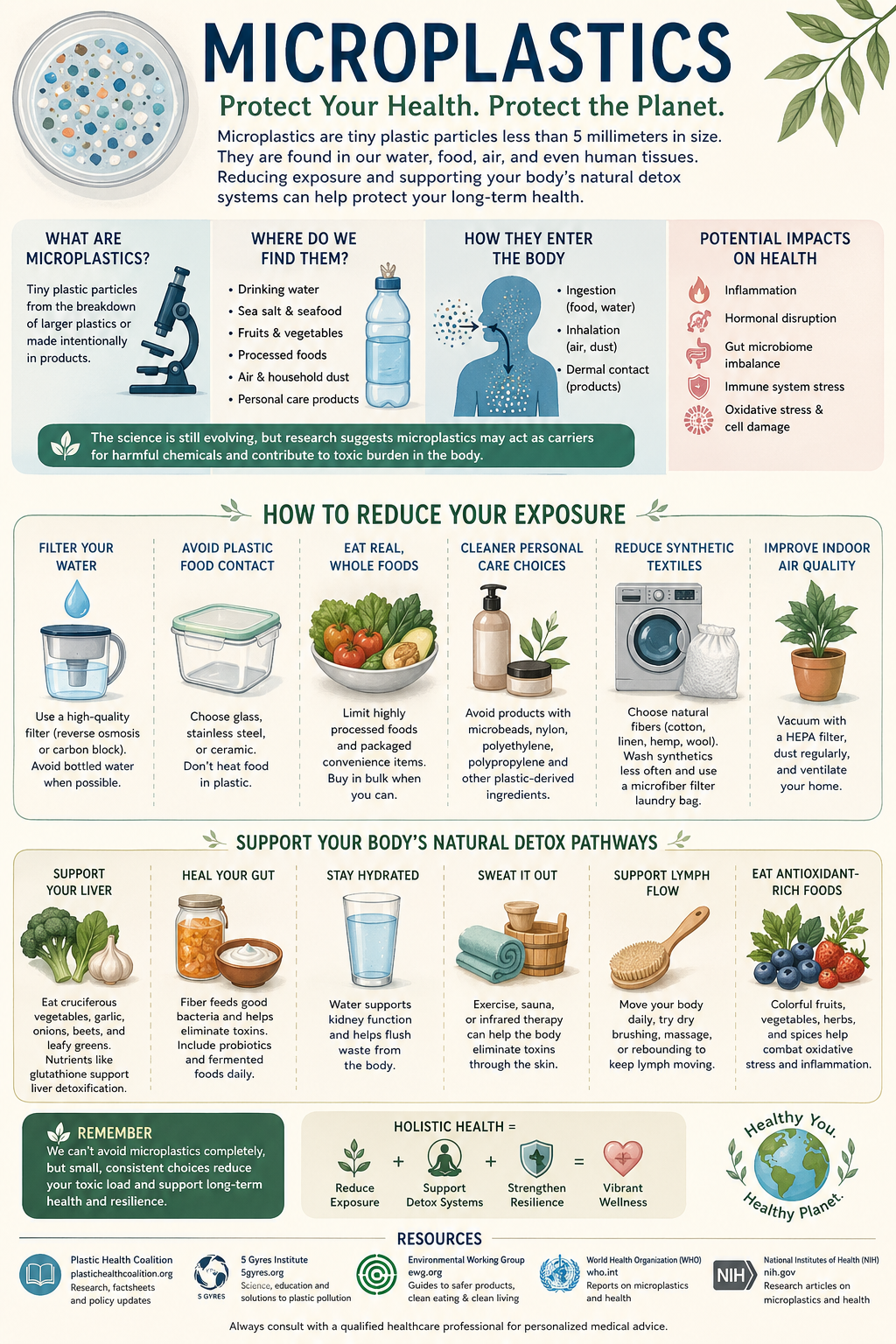
How Microplastics Affect the Body
Once inside the body, microplastics are not inert. Research shows they can contribute to oxidative stress, inflammation, immune disruption, and even DNA damage. They may also act as carriers for harmful chemicals such as bisphenols and phthalates—known endocrine disruptors that interfere with hormone signaling and metabolic function.
Holistically, this toxic exposure can burden key detoxification systems, including the liver, gut, and lymphatic system. Emerging evidence suggests microplastics may disrupt the gut microbiome and intestinal barrier, potentially contributing to systemic inflammation and chronic disease patterns. This aligns with the broader principle that toxicity and gut dysfunction are central drivers of many health conditions.
Reducing Exposure: Practical Strategies
While complete avoidance is unrealistic, reducing exposure is both practical and impactful:
Filter your water: Tap and bottled water are both sources of microplastics. High-quality filtration systems can reduce exposure.
Avoid plastic food contact: Heating or storing food in plastic increases chemical leaching. Choose glass, stainless steel, or ceramic instead.
Limit processed foods: Packaging and processing increase contamination risk.
Choose clean personal care products: Some contain plastic-derived compounds or microbeads.
Reduce synthetic textiles: Clothing made from polyester and nylon sheds microplastic fibers into air and dust.
These steps align with a foundational holistic principle: reduce the incoming toxic load so the body can function more efficiently.
Supporting Detoxification Naturally
There is currently no clinically proven method to “remove” all microplastics from the body, and many particles are likely excreted naturally through stool. However, supporting the body’s detoxification pathways can help mitigate their impact:
Optimize liver function: Nutrients such as glutathione precursors and sulfur-rich foods (garlic, onions, cruciferous vegetables) support phase I and II detoxification.
Increase dietary fiber: Fiber binds toxins in the gut and supports elimination. Whole plant foods, flaxseeds, and chia seeds are especially beneficial.
Support gut integrity: Probiotics and fermented foods help maintain a healthy microbiome, which may reduce toxin absorption.
Stay hydrated: Adequate water intake supports kidney filtration and elimination.
Promote sweating: Exercise and sauna therapy may assist in removing certain toxins through the skin.
Enhance lymphatic flow: Movement, massage, and dry brushing support circulation of lymphatic fluids and waste removal.
Additionally, antioxidant-rich foods—especially colorful fruits and vegetables—can help counteract inflammation and oxidative stress associated with microplastic exposure.
A Balanced, Holistic Perspective
Microplastics are an unavoidable reality of modern life, but the goal is not fear—it is resilience. The science is still evolving, and while concerns are valid, the most consistent recommendation from researchers is to reduce exposure where possible and support overall health.
A holistic approach emphasizes strengthening the body’s innate detoxification systems while minimizing unnecessary toxic inputs. Small, consistent changes—clean water, whole foods, reduced plastic use—can significantly lower your overall burden.
References
Li Y, et al. Risk Assessment of Microplastics in Humans. Polymers, 2025. ()
Li Y. Potential Health Impact of Microplastics. Environ Health, 2023. ()
Zhang X, et al. Microplastics and Human Health. Frontiers in Public Health, 2025. ()
Lin YD, et al. Sources and Effects of Microplastics. Toxics, 2023. ()
Health.com. Microplastics and Health Risks. ()
