Natural Ways to Reduce Cholesterol: A Holistic Guide to Better Heart Health
High cholesterol affects millions of Americans and is one of the leading risk factors for heart disease. While medications can be lifesaving for some individuals, a holistic approach focuses on identifying and addressing the underlying factors that contribute to unhealthy cholesterol levels. By improving nutrition, reducing inflammation, supporting gut health, balancing hormones, and making sustainable lifestyle changes, many people can naturally improve their cardiovascular health.
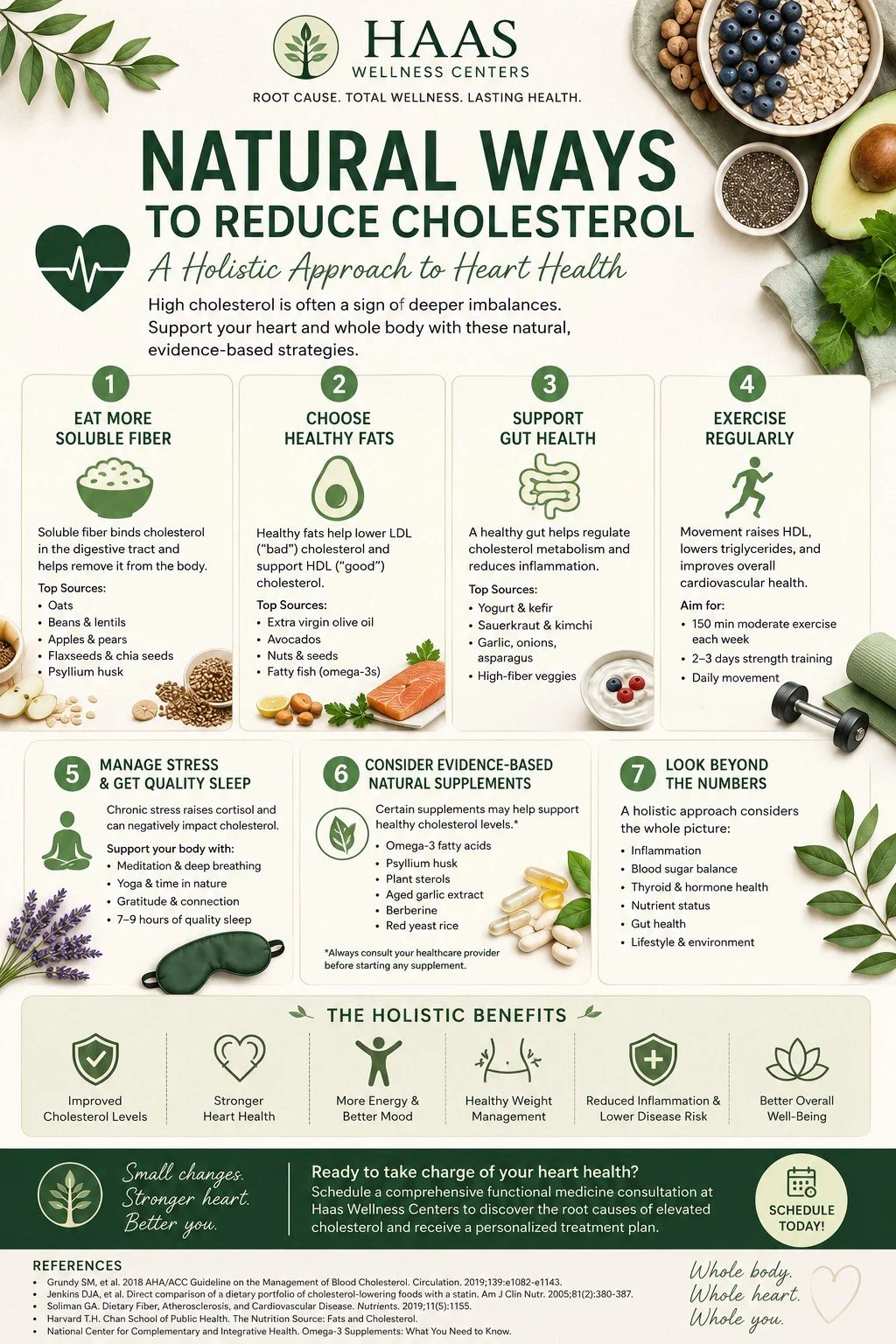
Eat More Soluble Fiber
One of the most effective natural ways to reduce cholesterol is by increasing soluble fiber intake. Soluble fiber binds cholesterol in the digestive tract, helping remove it from the body before it can be absorbed.
Excellent sources include:
Oats
Beans and lentils
Apples
Pears
Flaxseed
Chia seeds
Psyllium husk
Aim for at least 25–35 grams of total fiber daily.
Choose Healthy Fats
Not all fats are harmful. Replacing saturated and trans fats with healthier unsaturated fats can help lower LDL cholesterol while supporting HDL cholesterol.
Choose foods such as:
Extra virgin olive oil
Avocados
Walnuts
Almonds
Fatty fish rich in omega-3 fatty acids
Pumpkin and sunflower seeds
These foods also help reduce inflammation, an important contributor to cardiovascular disease.
Improve Gut Health
Emerging research shows that the gut microbiome influences cholesterol metabolism and overall heart health. A healthy digestive system supports proper bile acid recycling and cholesterol elimination.
Support your microbiome by eating:
Yogurt with live cultures
Kefir
Sauerkraut
Kimchi
High-fiber vegetables
Inulin-rich foods such as onions, garlic, asparagus, Jerusalem artichokes, and chicory root
Exercise Regularly
Physical activity naturally improves cholesterol levels by increasing HDL ("good") cholesterol while reducing triglycerides and improving insulin sensitivity.
Aim for:
150 minutes of moderate exercise each week
Two to three days of strength training
Daily walking whenever possible
Even small increases in activity can produce measurable improvements.
Manage Stress
Chronic stress contributes to elevated cortisol levels, inflammation, and metabolic dysfunction that may negatively affect cholesterol.
Helpful stress-management techniques include:
Meditation
Deep breathing
Yoga
Prayer
Spending time in nature
Adequate sleep
A consistent sleep schedule of seven to nine hours each night also supports healthy cardiovascular function.
Consider Evidence-Based Natural Supplements
Depending on your individual health needs, a holistic healthcare provider may recommend:
Omega-3 fatty acids
Psyllium husk
Plant sterols
Aged garlic extract
Berberine
Red yeast rice (only under professional supervision due to potential medication interactions)
Supplement recommendations should always be individualized and monitored by a qualified healthcare professional.
Look Beyond the Numbers
From a holistic perspective, cholesterol is only one marker of cardiovascular health. Inflammation, blood sugar regulation, thyroid function, nutrient deficiencies, oxidative stress, hormone balance, and digestive health all influence cardiovascular risk. Comprehensive functional testing may help identify these underlying contributors.
The Bottom Line
Natural ways to reduce cholesterol involve much more than avoiding fatty foods. A comprehensive approach that includes whole-food nutrition, regular exercise, stress reduction, restorative sleep, digestive health, and personalized nutritional support can improve cholesterol levels while promoting overall wellness. By addressing the root causes rather than simply masking symptoms, holistic medicine helps support long-term heart health.
Frequently Asked Questions
What foods lower cholesterol naturally?
Foods rich in soluble fiber—including oats, beans, apples, flaxseed, and chia seeds—as well as healthy fats from olive oil, nuts, avocados, and fatty fish may help support healthy cholesterol levels.
Can cholesterol be lowered without medication?
Many individuals can improve cholesterol through lifestyle modifications including diet, exercise, weight management, stress reduction, and targeted nutritional supplementation. However, some people may still require medication based on their individual cardiovascular risk.
What is the best holistic approach to high cholesterol?
The most effective holistic strategy combines an anti-inflammatory diet, gut health optimization, regular physical activity, adequate sleep, stress management, and personalized evaluation of metabolic and hormonal health.
References
Grundy SM, Stone NJ, Bailey AL, et al. 2018 AHA/ACC Guideline on the Management of Blood Cholesterol. Circulation. 2019;139.
Jenkins DJA, Kendall CWC, Marchie A, et al. Direct comparison of a dietary portfolio of cholesterol-lowering foods with a statin. American Journal of Clinical Nutrition. 2005;81(2):380-387.
Soliman GA. Dietary Fiber, Atherosclerosis, and Cardiovascular Disease. Nutrients. 2019;11(5):1155.
National Center for Complementary and Integrative Health. Omega-3 Supplements.
Harvard T.H. Chan School of Public Health. The Nutrition Source: Fats and Cholesterol.
