PEMF Therapy and Autism: A Holistic Perspective
Pulsed Electromagnetic Field therapy, commonly known as PEMF, is becoming increasingly popular in the holistic health community as a supportive therapy for individuals with autism spectrum disorder (ASD). PEMF uses low-frequency electromagnetic waves to stimulate cellular activity, improve circulation, and support nervous system balance. While research is still evolving, early findings and clinical observations suggest that electromagnetic therapies may offer benefits for communication, behavior regulation, sleep, and overall neurological function.
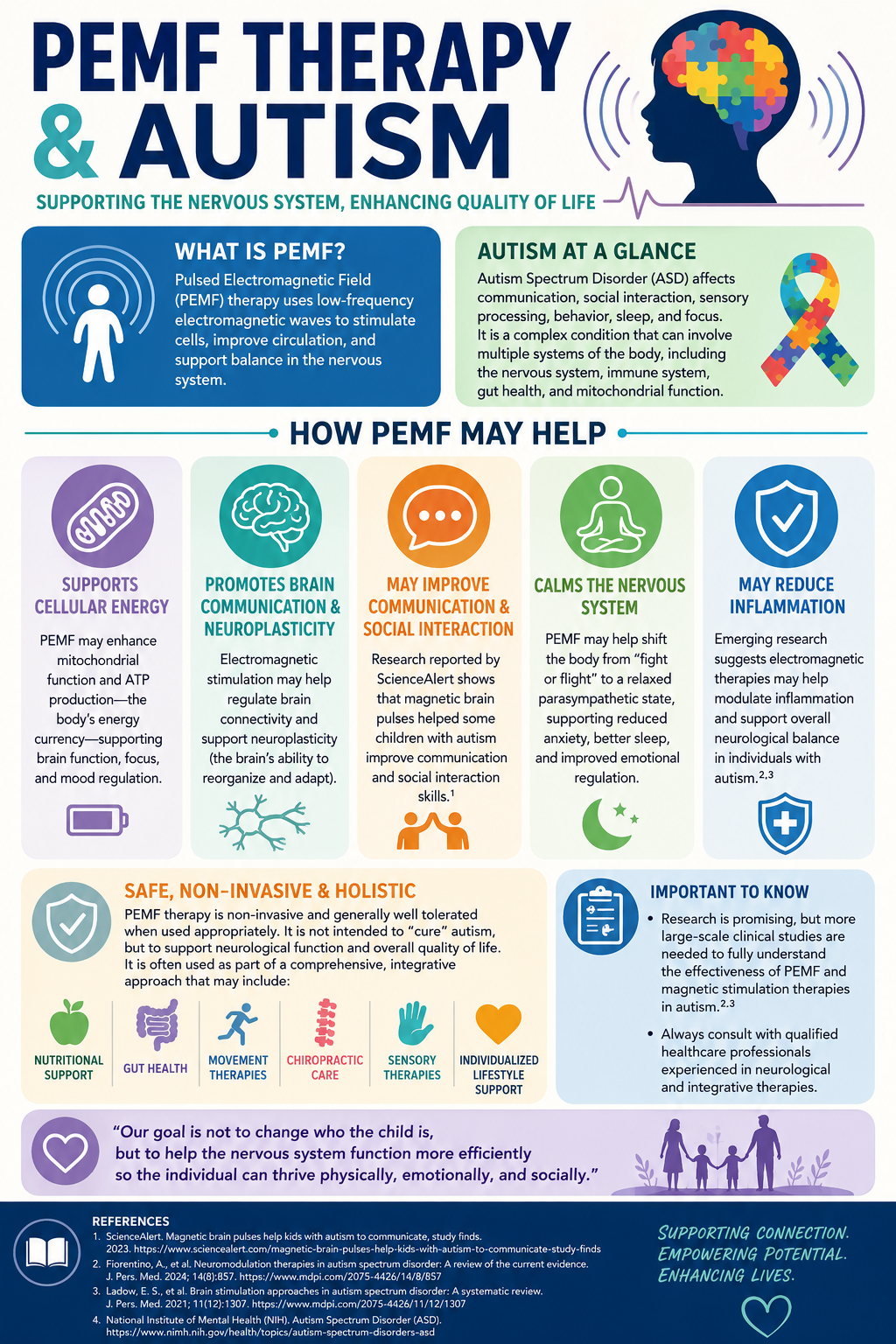
Autism is a complex neurodevelopmental condition involving challenges with communication, sensory processing, emotional regulation, social interaction, and focus. From a holistic perspective, autism may involve imbalances in multiple systems of the body, including the nervous system, immune function, mitochondrial activity, inflammation, and gut-brain communication. PEMF therapy is thought to support the body by improving cellular energy production and helping regulate neurological signaling.
One of the most promising areas of research involves magnetic brain stimulation therapies such as transcranial magnetic stimulation (TMS), which uses targeted magnetic pulses to influence brain activity. A recent article from ScienceAlert highlighted research showing that magnetic brain pulses helped some children with autism improve communication and social interaction skills. The researchers suggested that targeted electromagnetic stimulation may help activate under-functioning areas of the brain involved in language and social processing.
Other studies have shown that magnetic stimulation may help regulate brain connectivity and improve neurological communication pathways. Researchers are increasingly exploring how electromagnetic therapies may influence neuroplasticity — the brain’s ability to reorganize and adapt. This may be especially important in autism, where altered connectivity between brain regions is commonly observed.
PEMF may also help calm the autonomic nervous system. Many individuals with autism experience chronic sensory overload, anxiety, hyperactivity, and sleep disturbances associated with excessive “fight-or-flight” nervous system activity. Gentle PEMF frequencies may help shift the body into a more relaxed parasympathetic state, supporting improved sleep, emotional regulation, and stress resilience.
Importantly, PEMF therapy is non-invasive and generally well tolerated when administered properly. It is not intended to “cure” autism, but rather to support nervous system function and overall quality of life. In integrative and holistic healthcare settings, PEMF is often combined with nutritional therapy, gut health support, movement therapies, chiropractic care, sensory integration, and individualized lifestyle interventions.
Although early findings are encouraging, more large-scale clinical studies are needed to fully understand the effectiveness of PEMF and magnetic stimulation therapies in autism. Families considering PEMF therapy should work with qualified healthcare professionals experienced in neurological and integrative therapies.
References
ScienceAlert – Magnetic Brain Pulses Help Kids With Autism Communicate, Study Finds
MDPI Journal of Personalized Medicine – Neuromodulation Therapies in Autism Spectrum Disorder
MDPI Journal of Personalized Medicine – Brain Stimulation Approaches in Autism Spectrum Disorder
National Institutes of Health (NIH) – Autism Spectrum Disorder Overview
