Feelings Buried Alive Never Die: The Powerful Connection Between Emotions and Physical Health
As holistic healthcare practitioners, we recognize that true healing involves much more than treating physical symptoms. The body, mind, and emotions are deeply interconnected. One book that has profoundly influenced holistic medicine is Feelings Buried Alive Never Die by Karol K. Truman. While not a substitute for medical care, this book encourages readers to explore how unresolved emotional stress may contribute to chronic illness and physical discomfort.
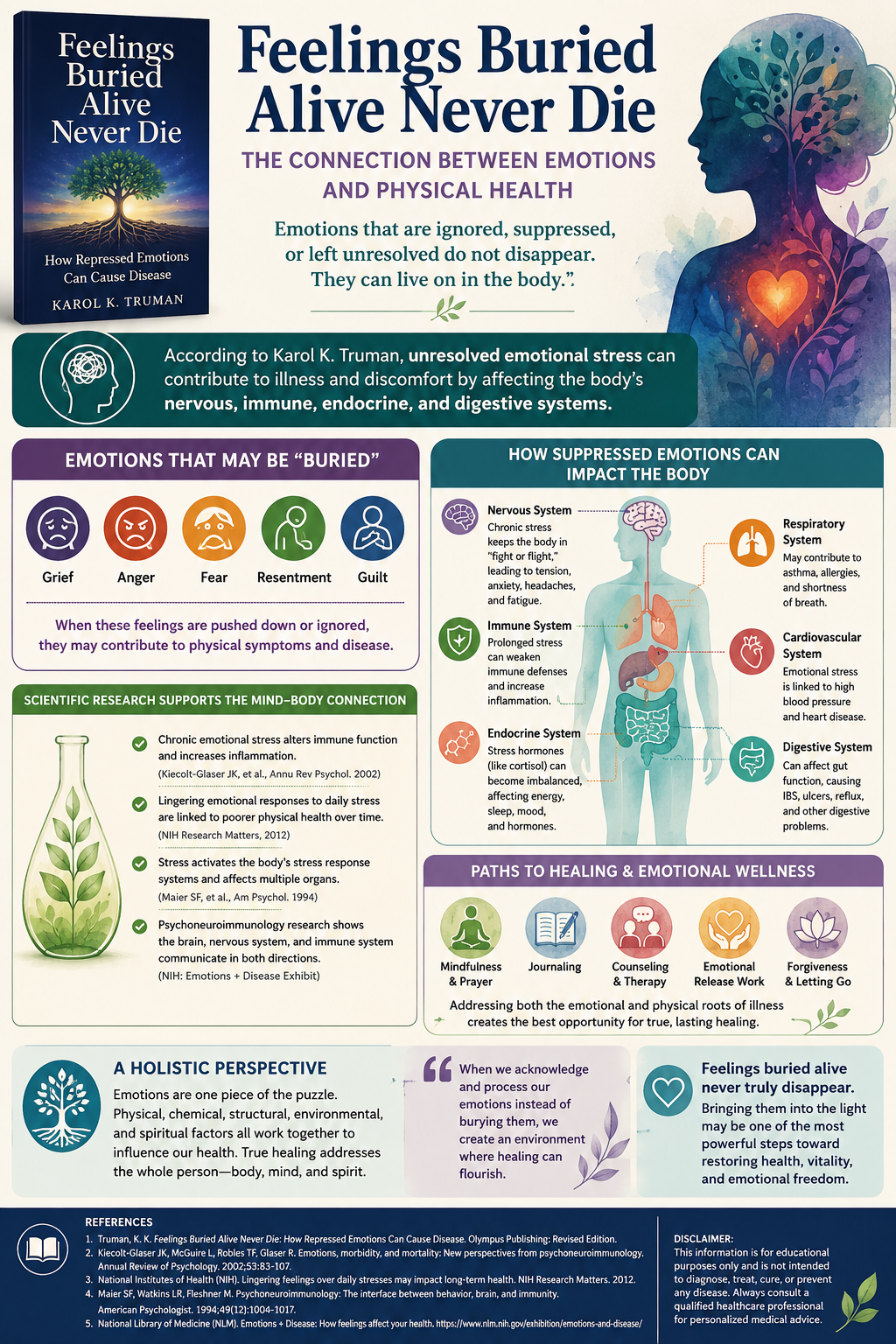
The central message is simple yet profound: emotions that are ignored, suppressed, or left unresolved do not simply disappear. Instead, they can influence the body's nervous, immune, endocrine, and digestive systems. Chronic stress, unresolved grief, fear, anger, resentment, and guilt may contribute to inflammation, hormone imbalance, digestive disorders, headaches, fatigue, muscle tension, and a weakened immune response.
Scientific research supports the idea that chronic emotional stress affects physical health. The field of psychoneuroimmunology has demonstrated that prolonged stress can alter immune function, increase inflammatory chemicals, and disrupt hormone regulation. Although not every illness is caused by emotional factors, emotional well-being is undeniably an important component of overall health.
In my clinical experience, many patients have spent years searching for answers to persistent symptoms. While laboratory testing, nutritional deficiencies, toxins, food sensitivities, hormone imbalances, and infections must all be carefully evaluated, emotional health should never be overlooked. Healing often occurs more completely when both the physical and emotional aspects of health are addressed together.
One of the strengths of Feelings Buried Alive Never Die is that it encourages individuals to become aware of emotional patterns that may have developed over decades. By identifying these hidden stressors, patients often become more engaged in their healing journey. Techniques such as mindfulness, prayer, journaling, counseling, emotional release work, and forgiveness can complement nutritional support and other holistic therapies.
A holistic approach does not suggest that emotions are the sole cause of disease. Rather, it recognizes that physical, chemical, structural, environmental, and emotional factors all work together to influence health. Addressing each of these areas provides the greatest opportunity for long-term wellness.
When we acknowledge and process our emotions instead of burying them, we create an environment where healing can flourish. As the title of the book reminds us, feelings buried alive never truly disappear. Bringing them into the light may be one of the most powerful steps toward restoring health, vitality, and emotional freedom.
References
Feelings Buried Alive Never Die. Karol K. Truman. Olympus Publishing; Revised Edition.
Psychoneuroimmunology demonstrates that chronic emotional stress can alter immune function and inflammatory responses.
Janice K. Kiecolt-Glaser, McGuire L, Robles TF, Glaser R. Emotions, Morbidity, and Mortality: New Perspectives from Psychoneuroimmunology. Annual Review of Psychology. 2002;53:83-107. This landmark review describes how chronic negative emotions influence inflammation, immunity, wound healing, and disease risk.
National Institutes of Health. Lingering Feelings Over Daily Stresses May Impact Long-Term Health. Research found that prolonged emotional responses to everyday stress were associated with poorer physical health years later.
Steven F. Maier, Watkins LR, Fleshner M. Psychoneuroimmunology: The Interface Between Behavior, Brain, and Immunity. American Psychologist. 1994;49(12):1004-1017.
National Library of Medicine. Emotions + Disease educational exhibit describing the bidirectional communication between the nervous and immune systems.
Note: Although emotional health is an important component of overall wellness, chronic illnesses are multifactorial. A comprehensive holistic evaluation should also consider nutrition, environmental toxins, infections, hormone balance, genetics, lifestyle, and other medical conditions when investigating the root causes of disease.
